
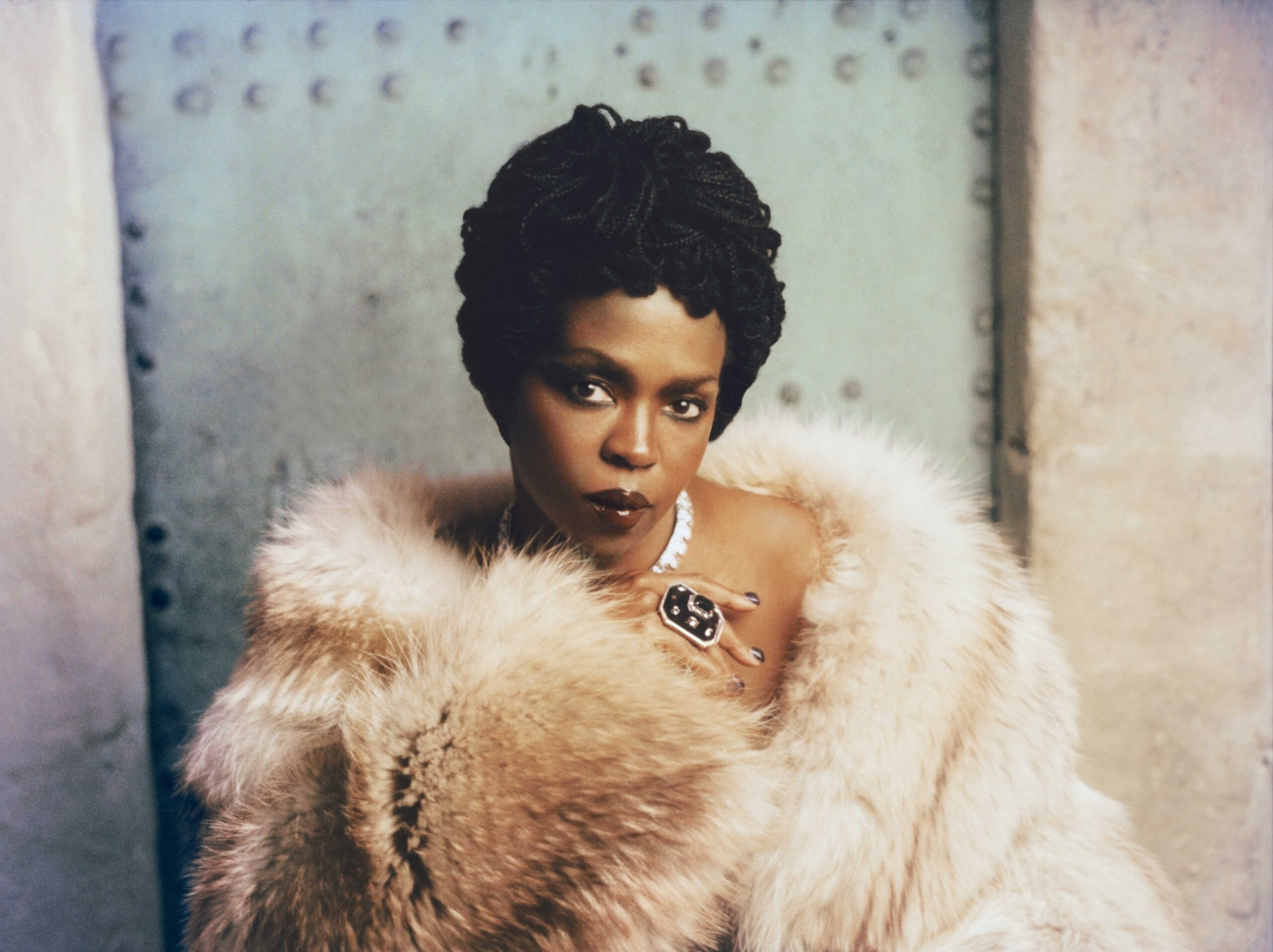
Ms. Lauryn Hill Has Something To Say
Ms. Lauryn Hill Has Something To Say
Issue 005
Letter by Ms. Lauryn Hill
Photography by Jessica Madavo
Note by Danielle Powell Cobb
To the World,
I have always recognized the value of a collective African diaspora and held tremendous respect for the people who have carried the movement forward.
As a child, I remember having recurring visions of old, almost ancient, relic-like vases with cracks visible beneath their glaze, as if they could shatter at any moment into hundreds or thousands of pieces. I remember believing that if one of those vases were to fall apart, I could and would have to put it back together. I don’t know why this was my recurring dream. The metaphor, however, was clear. I understood that culturally we were not a monolith, but I knew that we belonged together. Not just in any fashion, but as the ankle bone is connected to the shin bone, the shin bone to the knee, the knee to the thigh and all of the muscles, tissues, fascia, blood and everything else that makes a body whole.
It wasn’t difficult to see that many of our dilemmas existed because we were outside of our natural order, and that if we could mend the rupture, we might be able to heal ourselves and peace, safety, love, connection, common purpose, efficiency and growth could become our consistent and lasting experience.
This isn’t fantasy, but rather what becomes possible when our self-concept is no longer distorted, manipulated or controlled by outside interests that benefit from us seeing ourselves as only competitive, and as lacking sufficient space, opportunity or resources to enjoy success and abundance simultaneously. We have survived within systems that were never designed for our collective welfare, but instead have taken advantage of every division among us. As we continue to see more clearly, we become better equipped to diagnose the problem, diligently treat the condition, and collectively develop solutions intended for our healing and repair.
It is my aim that Diaspora Calling! acts as a place where we can organize, share and attempt to resolve the issues that complicate our lives. I reject the notion that we cannot build together, create infrastructure or move with collective growth, development and power in mind.
We are not valuable only after someone outside of our communities notices or declares something beautiful, meaningful or worthy. We are valuable because we were created with value. When we choose to share that value with one another and with the greater world, it should be a choice motivated by love, not aggression or obligation.
When we are together, our natural abundance becomes undeniable. This is not something to hide or apologize for, but something to protect and preserve. The more we heal ourselves and transform the ways we engage with one another, the more fully we can operate within our true and abundant inheritance.
With Love,
Ms. Lauryn Hill.
An Editor’s Note:
When I first meet Ms. Lauryn Hill, it is no meeting at all. It is more of a brief encounter. There is a team of people, myself included, waiting together, worrying together, about a shoot that is running four hours behind. It’s just after 4 p.m. in Casablanca, Morocco, and her team and Citizen’s team have melted together into a small crowd taking up every seat in the marble-strewn lobby of the Royal Mansour Casablanca hotel. The photographer, Jessica Madavo, and the magazine’s creative director, Henrietta Gallina, are huddled next to me redrafting the plan for the day that will soon turn to night. The vans that will shuttle us to a small village at the edge of the city—our planned first shoot location, quickly turning into our only shoot location—have been idling just outside the hotel’s entrance for the better part of two hours.
Then she emerges from the elevator.
This, the first in-person encounter, is traditionally when Henrietta and I, considering ourselves representatives of the magazine, introduce ourselves to the cover star. It’s the moment when, after weeks of creative conference calls, WhatsApp messages about what is on and off the table, and emailed riders, we reset the relationship, establish a familiarity, crack a joke, express our excitement for the day, exchange niceties, and walk away with this sort of we’re-all-friends-now, one-two-three, let’s-go team feeling. We have intentionally positioned ourselves in the path from the elevator to the idling vans with this cause and end result in mind.
Ms. Hill moves toward us; she is beautiful. She is self-styled, dressed in the silhouette that has in the past 10 years or so become her signature: layers of clothes that flow away from her body. She is wearing an exaggerated legionnaire hat with a long train of fabric that hangs from its back, sweeps down and around her body, and pools onto the floor behind her. Underneath, she wears a long ornate kaftan jacket, a sheer black long-sleeved shirt and a voluminous white skirt that also reaches the ground. As she walks, I notice, peaking through her skirt, stacked platform leather boots—about five inches high—that reach her calves and close at their front with a chunky silver zipper. IMDb.com puts Ms. Hill at about 5’2 ½”.
She is flanked by two members of her team; one is holding the fabric of her clothes up off the floor, the other is fussing with her hair, tucking misplaced braids back where they belong underneath her hat. Henrietta begins to speak. But Ms. Hill interprets her to say that she cannot look at or hear us because of the hat. She does not stop walking but hurriedly breezes past us, out of the hotel and into one of the idling vans.
I am reluctantly in Casablanca because Ms. Hill has expressed that she will not sit for an interview. Her team suggested that I, or whoever, write whatever one can come up with without a sit-down interview. Ms. Hill doesn’t want to talk to a journalist. I thought she might change her mind if we met in person. It becomes clear to me, when she breezes past us with little fanfare, that she will not.
Weeks later, when she and I establish a kind of arms-length rapport over text, and she has, through her representative, proposed that she write an open letter, she expresses her attitude toward the press clearly: “I stopped speaking to/through the press quite some time ago when it became clear to me that one particular writer and publication had little insight into what my experience actually was and at the time had little interest. They felt entitled to portray whatever got them the attention they were seeking. People are entitled to say whatever they want, but not with my participation.”
In fact, outside of short promotional interview spots and an email Q&A with Brittany Spanos for Rolling Stone in 2021, Ms. Hill’s last significant in-person interview was 20 years ago, when she met with journalist Joan Morgan for Essence Magazine’s February 2006 issue. The last reported cover story she participated in was written by Daisann McLane for Harper’s Bazaar’s 1999 September issue. Over the past 27 years, Ms. Hill has kept the entire media machine at arm’s length.
It is important to note that Ms. Hill specifically calls out “speaking through the press” because it would be incorrect to suggest that she has not spoken. During the past almost three decades, Ms. Lauryn Hill has delivered a series of personal statements to the public each time a crisis, controversy or triumph has arrived that she deems worthy of her acknowledgment.
It would also be foolish to make some neo-feminist proclamation that Ms. Hill is a celebrity who seeks to “control her own narrative”; instead, she refuses to contribute to a “narrative” at all. She seems to have made the calculation that a narrative about a person, about her, the ones that are confined within a few thousand words on a page and filtered through the voice of another, can never fully capture the entirety of her as a person. And maybe she is right, or at least on to something.
But what might be more indicative of why Ms. Hill has landed in this estrangement from the media is that she seems wholly committed to the idea of herself as someone with a message, or the idea that this is what is required of her, and that she trusts no one else with this calling.
In Casablanca, we follow Ms. Hill in a caravan of black vans to the site of the shoot. It is early July. It is hot, and out the window we pass cafe after cafe, where large groups of men are congregating outside, each watching their individual cellphones together. Morocco is playing in the 2026 World Cup, jointly hosted by Canada, Mexico and the United States. We are in a North African, Arab-Berber nation, and a city of people looking toward the West as a caravan of Westerners passes them by. Ms. Hill suggested that this shoot happen in Casablanca, where she is scheduled to perform two days later, because she wants to be on the continent. This is a symbolic gesture toward a message she wants to put forth about the value of fostering connections between people of the African diaspora, in service of promoting Diaspora Calling!, a music festival she is curating and headlining the following month.
Conceived by Ms. Hill in 2016, in partnership with the streaming service TIDAL, Diaspora Calling! launched in New York, billed as a three-day festival and art exhibition at Brooklyn’s Kings Theatre. The inaugural event focused heavily on Haitian visual art and live performances. Its closing night was headlined by Ms. Hill herself, and the festival was presented as a celebration of the shared cultural heritage of the global African diaspora. The event then evolved into a three-month-long, multi-city tour billed “MLH Caravan: A Diaspora Calling!,” which brought together artists such as Nas, Kehlani and Little Simz.
At the time Ms. Hill suggested that we shoot her in Casablanca, she was preparing to both revive and expand the Diaspora Calling! brand with a major open-air event at the National Bowl, a 65,000-capacity venue in Milton Keynes, England, roughly 45 miles northwest of London. The event is planned to feature performances by Ms. Hill alongside Wyclef Jean, Erykah Badu, Ms. Hill’s sons YG and Zion Marley, U.K. rap artist Giggs and afrobeat star Fireboy DML, and will be hosted by U.S. comedian Dave Chappell. At the time of writing, promotional materials state that more guests will be announced. In a press release provided by Ms. Hill’s representative, the show is promoted as being “where the global African diaspora gathers, reconnects, and begins shaping a shared future together.” [The Diaspora Calling! festival made its U.K. debut on Friday, August 7, 2026, at the National Bowl in Milton Keynes, England, with a reported more than 35.000 people in attendance.]
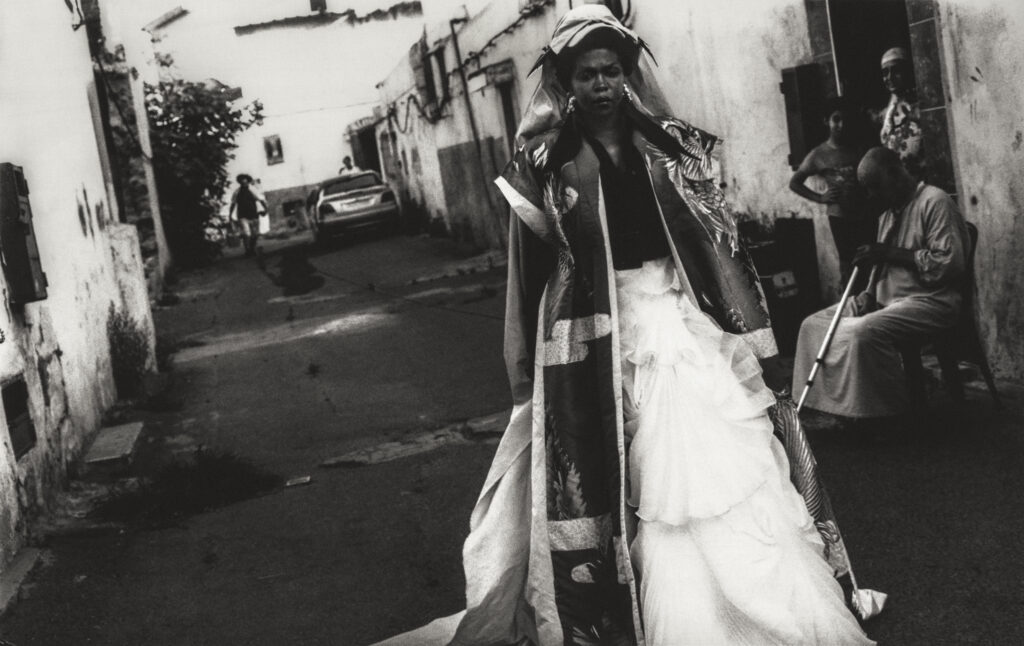
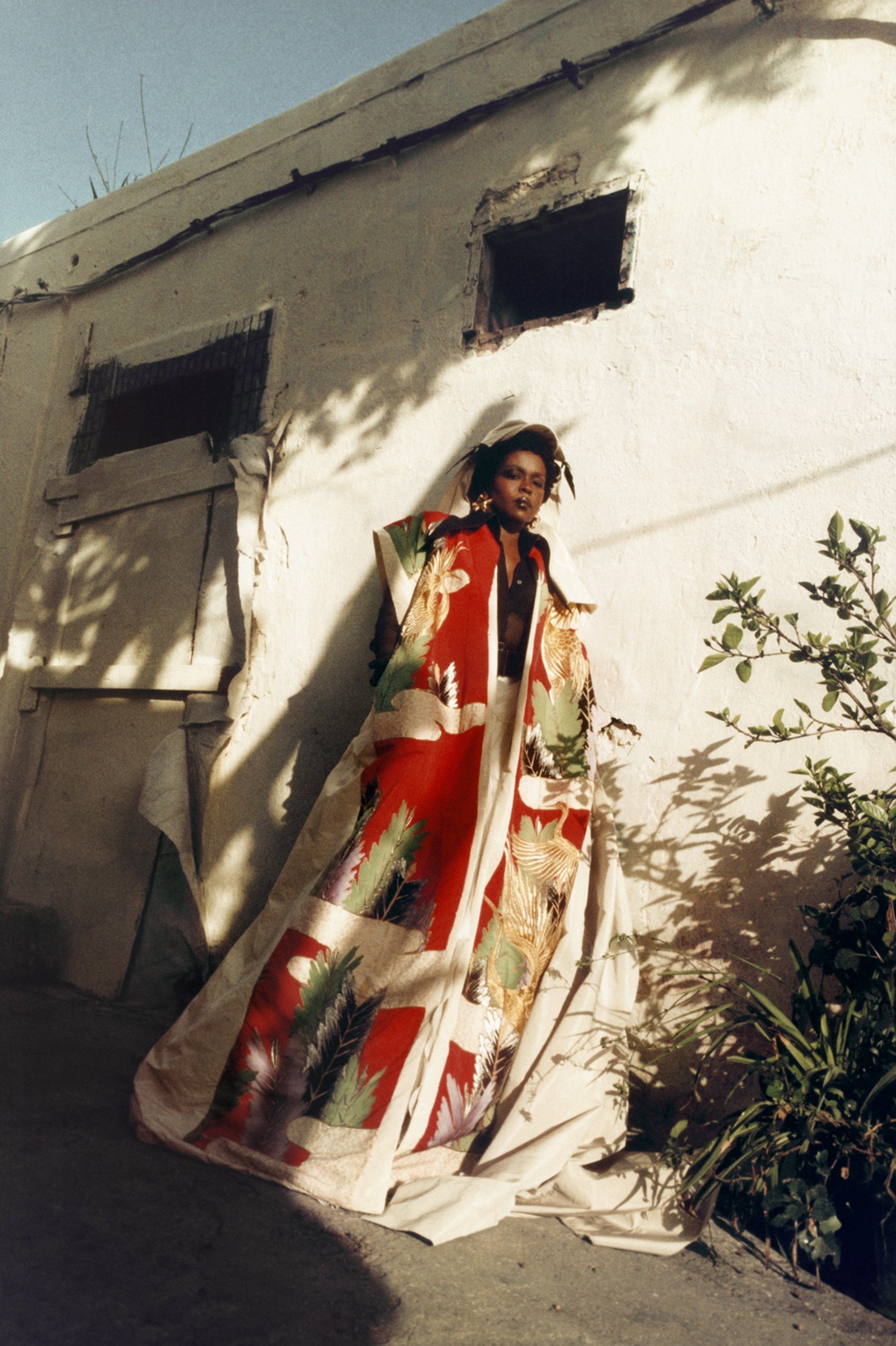
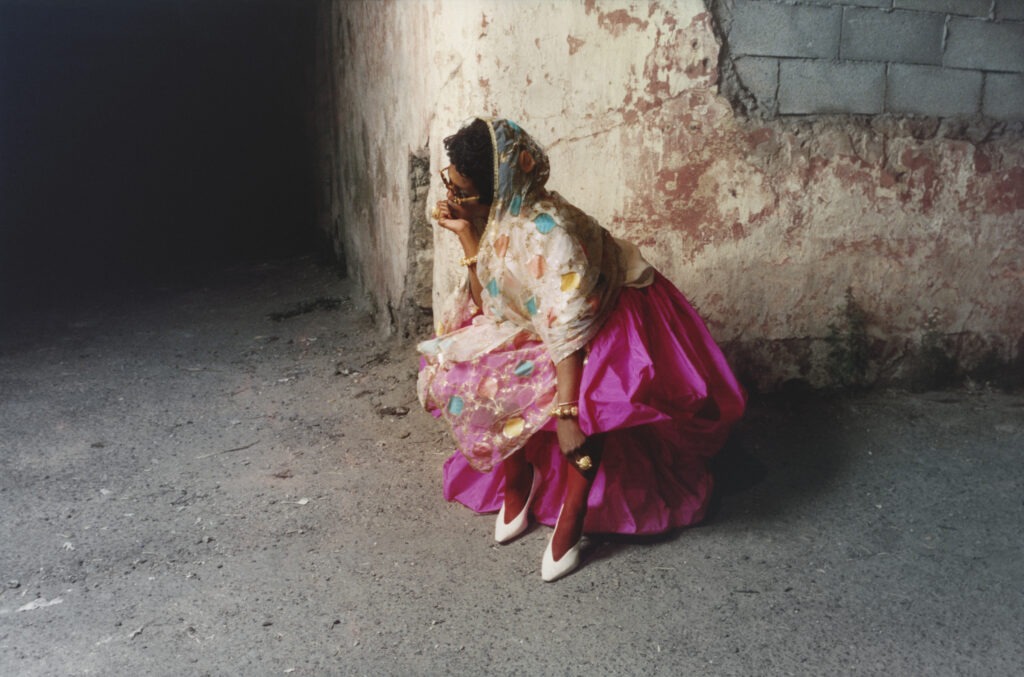
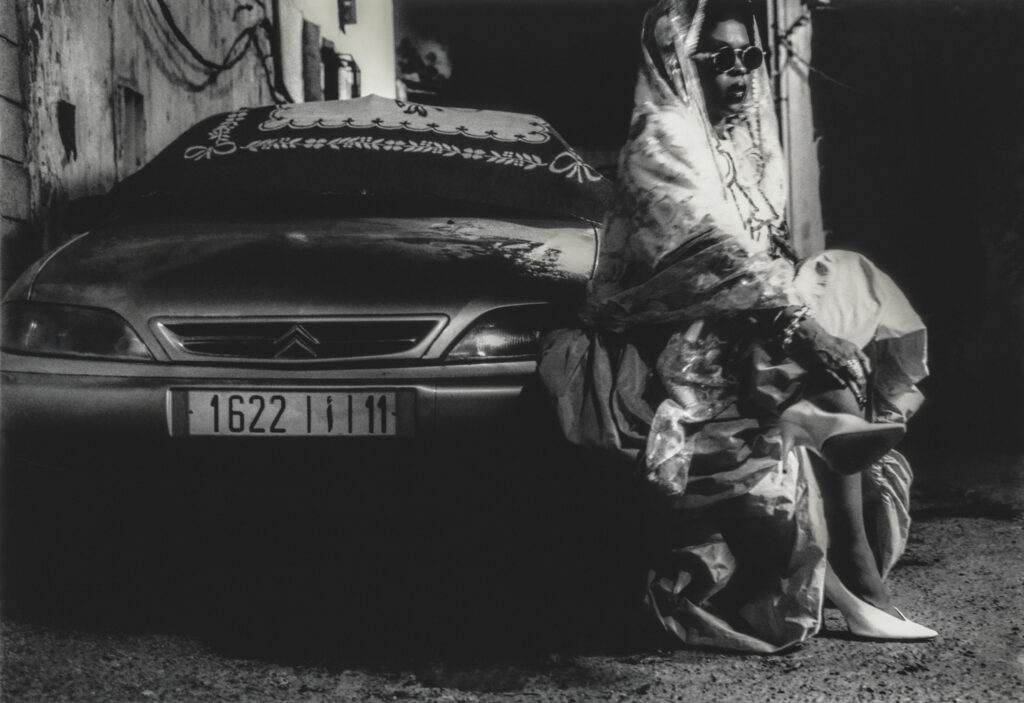
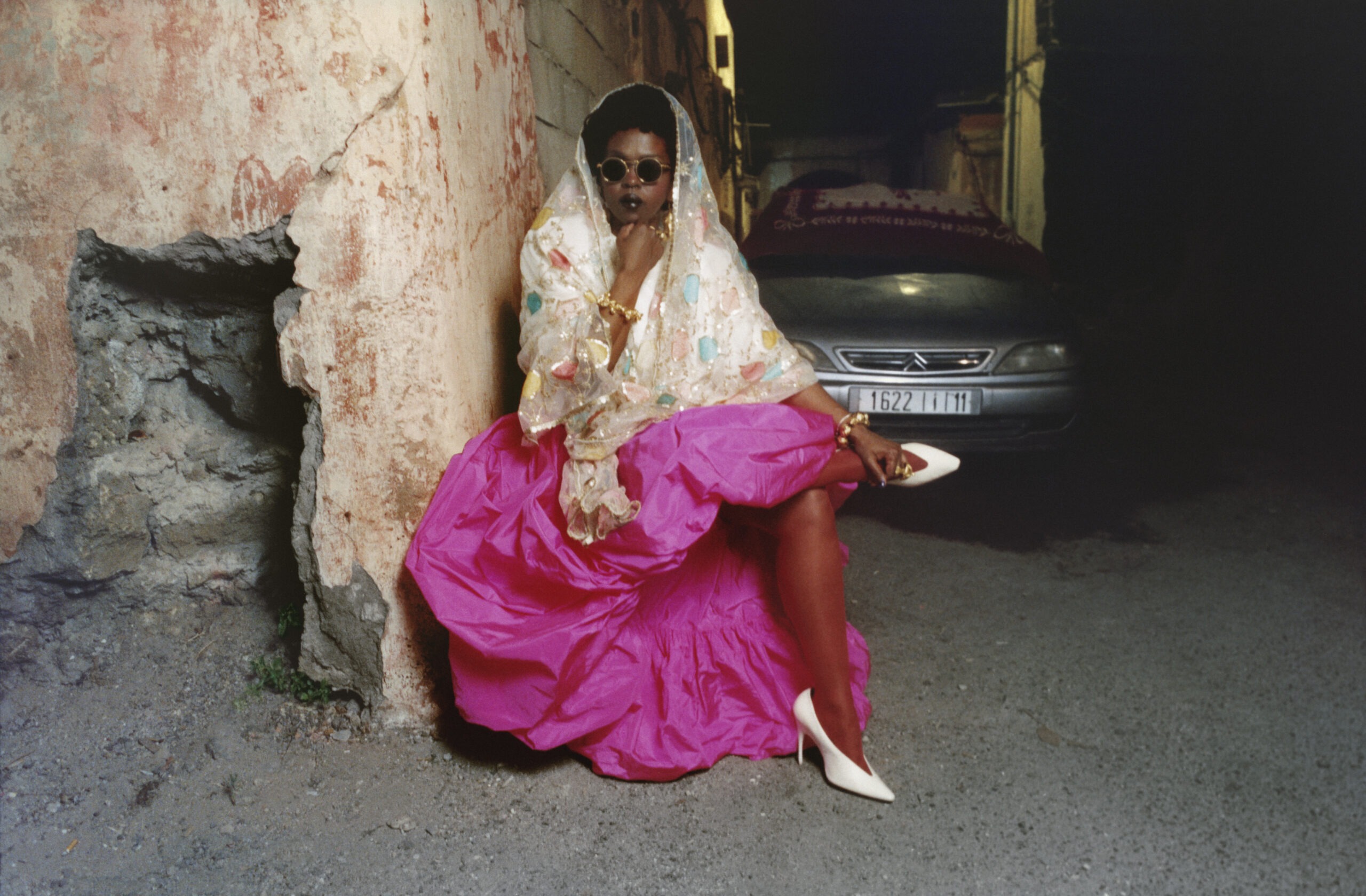
In Morocco, we arrive at the shoot location, a small local community enclosed by white walls. We are five hours behind call time and three hours away from sunset. Henrietta and Jessica have all but stopped making new plans and have resigned themselves to no real plan, to simply seeing what can be done within the time they have. They shoot as the sun fades, as children and women and young boys from the community pull up stools and plastic chairs to watch as Ms. Hill directs the world around her— suggesting poses, calling out for a crate to stand on, dictating what she will and won’t wear, telling her makeup artist what shade and what brand of makeup to use. Tensions run high as night falls. Then nature rather than choice determines that the shoot day has ended.
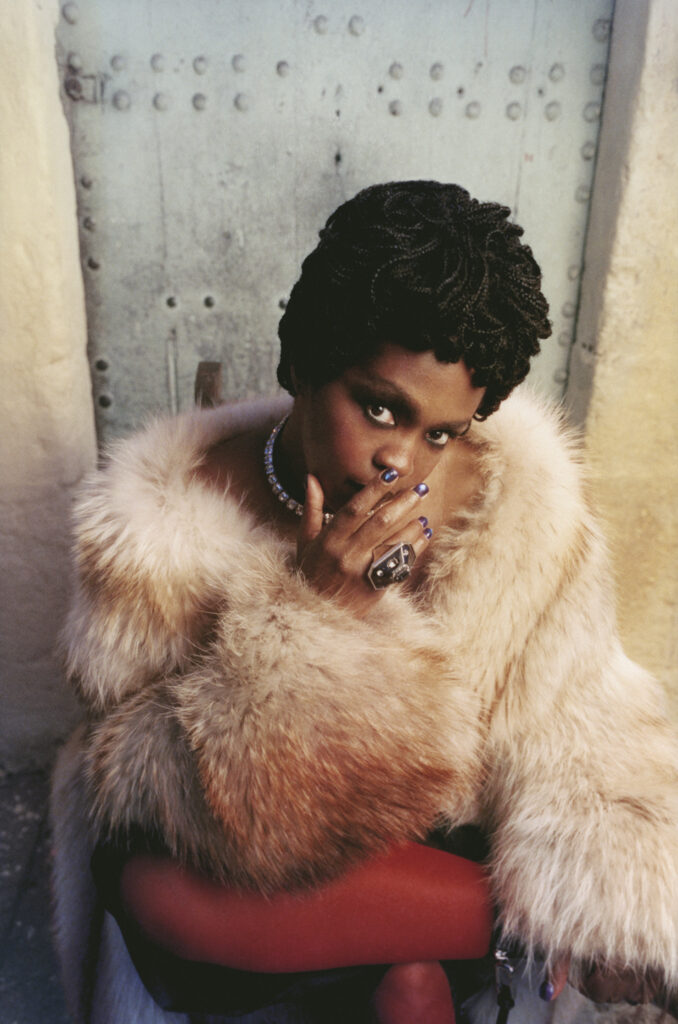
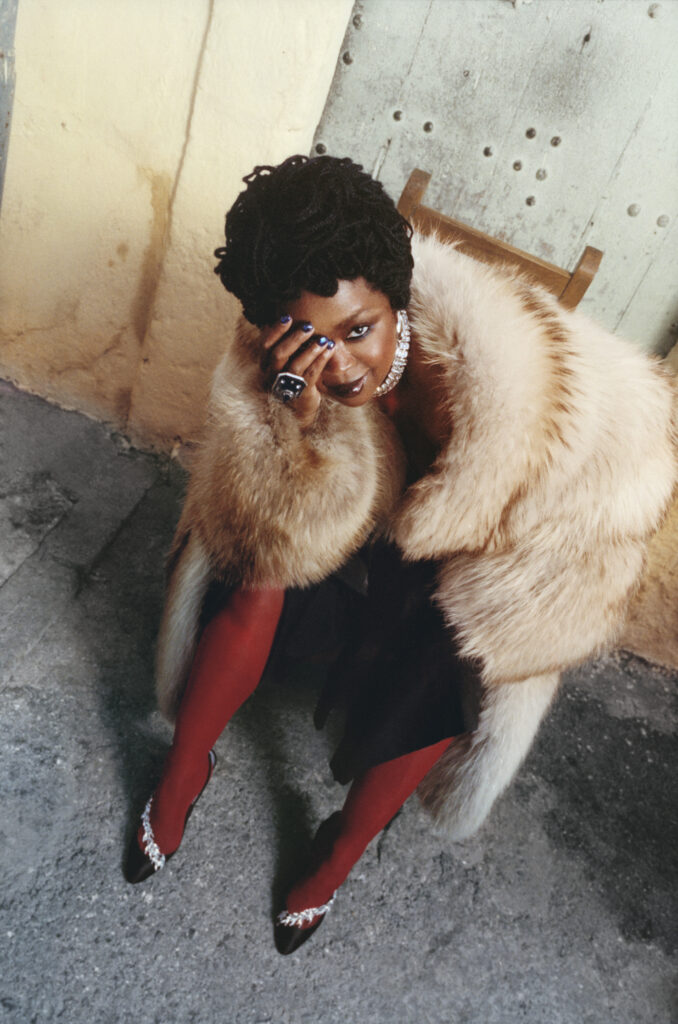
In the images that are finally delivered a few days later, the ones that accompany this story, there is no tension. Ms. Hill is beautiful. The art does not carry the chaos of its making. And I begin to think that perhaps this is Ms. Hill’s gift: an ability to, or an inability not to, hyperfocus on what it is she is trying to say or make, regardless of time, cost, and above the opinions and ideas that others want her to adopt. She is a perfectionist, in total service to her vision and with the high aim of not failing to say or express something meaningful or exceptional, and she seems to see those who are in her orbit as instruments for that greater cause. It is a way of moving through the world that has reliably left a number of those who encircle her and wait for her—or, as she worded it in a 2000 interview with the American Academy of Achievement, those who are “needed in order for me to exercise my ideas”—with a less than glowing impression of the star. It is also a way of moving through the world that has garnered her, through her work, the legendary status that few other music artists share.
In 1996, a 21-year-old Lauryn Hill was already the centerpiece of one of the biggest hip-hop groups in the world. As the vocal anchor of the Fugees, her verse on “Ready or Not” and her lead vocals on “Killing Me Softly” helped their second album, “The Score,” sell more than 18 million copies worldwide. While the group’s success turned her into a household name, it was her move to step out on her own two years later that reshaped the music industry’s commercial baseline for female artists.
When “The Miseducation of Lauryn Hill” landed in August 1998, it shattered expectations. The album sold 422,000 copies in its first week—at the time, the highest single-week sales figure registered by a woman in the SoundScan era. Driven by the lead single “Doo Wop (That Thing),” which debuted at No.1 on the Billboard Hot 100, “Miseducation” spent four weeks at the top of the charts and earned 10 Grammy nominations. On February 24, 1999, Lauryn Hill walked away with five awards, including Album of the Year—making her the first hip-hop artist to win the Recording Academy’s highest honor. To date, the album has sold more than 20 million copies worldwide and earned RIAA Diamond certification, solidifying her early career as one of the most commercially dominant runs in modern music history.
To understand Lauryn Hill’s emergence in the mid-1990s, one must zoom out not only to the state of the music industry but to the larger cultural discourse taking place at the time.
By 1996, hip-hop was locked in a bitter regional civil war, and at the tail end of a transition away from a niche art form performed primarily by Black artists for Black people to an international juggernaut. The rise of gangsta rap had brought unprecedented commercial fortune, but it had also drawn sharp critiques from luminaries, activists, and purists who argued the culture was trading its sociopolitical roots for material nihilism. Running parallel to that argument was the “conscious” hip-hop movement—a lineage rooted in the Afrocentricity of the Native Tongues collective (A Tribe Called Quest, De La Soul, Jungle Brothers, among others), the political militancy of Public Enemy and KRS-One, and the street-level spiritual philosophy of the Nation of Islam, Five-Percenters, and other groups. Simultaneously, R&B was undergoing a quiet revolution. Dubbed “neo-soul” by music executive Kedar Massenburg, artists such as D’Angelo, Erykah Badu, Maxwell, and Meshell Ndegeocello were pushing back against the slick, polished, synth-heavy sound and often overtly sexual lyrics of mid-90s radio R&B. They looked back to the instrumentation and vocal grit of 1970s soul—Donny Hathaway, Stevie Wonder, Marvin Gaye, Nina Simone—and fused it with hip-hop beats and Black consciousness interiority.
Ms. Lauryn Hill did not simply fit into these two movements; she served as their bridge, their apex and their most visible icon. She was prophetic, seen as embodying a counter to the popularized images of Black women as sexual objects and Black men as gangsters and hustlers.
In 1996, the Fugees released “The Score” and in tracks like “The Zealots,” Lauryn Hill offered up lyrics like, “While you rhymin’ about gats, I’m sellin’ soul by the tracks / Hip-hop is sick, it needs a real lyricist.” That same year, Tupac’s “All Eyez On Me” topped the hip-hop Billboard charts. While the most commercially successful artist of the time presented tales of “Comin’ up as a nigga in the cash game / Livin’ in the fast lane,” the Fugees provided an expanded image of what Black life was and an alternative message about what should be celebrated. Ms. Hill expressly presented herself as an orator sharing a message that would uplift and enlighten those who listened to her.
Then, later that same year, on September 7, 1996, Tupac was shot. Six days later, he succumbed to his injuries and was pronounced dead. He was 25 years old. Early the following year, on March 9, 1997, The Notorious B.I.G. (Christopher Wallace) was shot and killed. He was 24.
What the 23-year-old Lauryn Hill offered the world of hip-hop in 1998, with the release of “The Miseducation of Lauryn Hill” was a timely sermon about a perceived crisis and a solution to the dilemma at hand. The lead single on the album, “Doo Wop (That Thing),” debuted at No.1 on the Billboard charts, warning young girls against “showing off your ass” and giving “it up easy,” while excoriating young men that “pack pistols by they waist,” “drink Cristal by the case” and “still in they mother’s basement.” Remarkably, this song and the album it was on, offered a civil rights era message of Black consciousness with themes of anti-violence, religiosity, community building and uplift, and cemented Ms. Hill as what the industry would have deemed the most unlikely pop star.
Over the years, some critics have argued that Ms. Hill’s messaging, in “Doo Wop,” throughout “The Miseducation of Lauryn Hill,” and in projects that followed, relied on traditional “respectability politics”—the idea that marginalized groups can avoid harm or mistreatment simply by dressing modestly and behaving with propriety. But journalist Akiba Solomon, speaking to Joan Morgan in her book “She Begat This: 20 Years of The Miseducation of Lauryn Hill,” countered that idea, stating: “Lauryn was a middle-class girl from suburban New Jersey who talked about class—working and middle—in her lyrics. For somebody like her to talk about the fullness of Black experience was important and brave because at the time, there was a whole swath of people in hip-hop pretending that they weren’t middle-class. Middle-class people were trying to hustle backward, and hood people were trying to appear wealthy. It was a weird and I would argue, self-destructive, take. Black people, and Black women in particular, have multiple sides. Even the so-called hoodest of us also have middle-class concerns. Lauryn’s lyrics felt like air to me. The whole album did.” Akiba’s point of view is undoubtedly Ms. Hill’s legacy— the resonance of Ms. Hill’s message, and the way she spoke to the experiences and concerns of a generation of young Black people attempting to reckon with questions of how to live. Lauryn Hill’s message provided a very particular answer to a very urgent question. And she has stayed on message for the past 30 years. Obsessively so, and probably to her own commercial detriment.
In the late 1990s, at the height of Lauryn Hill’s career, when she was a coveted pop star appearing on the covers of Harper’s Bazaar, Essence, Time, Vibe, and Teen People, she never truly capitalized on her fame, beauty and talent the way that celebrities and popular musicians have all but become expected to. In an era where her female counterparts were hawking Pepsi, DKNY jeans and Tommy Hilfiger jackets to their fans, the only ad that Lauryn Hill appeared in was an anti-drug use PSA with the Office of National Drug Control Policy. In that 1999 TV spot, she was again on message, saying: “I think you have to realize who you are as a person. You know, who you are as a child of God. That your potential is just so much greater than any chemical.” One can only imagine how much money and how many easy opportunities to expand her stardom Ms. Hill has left on the table.
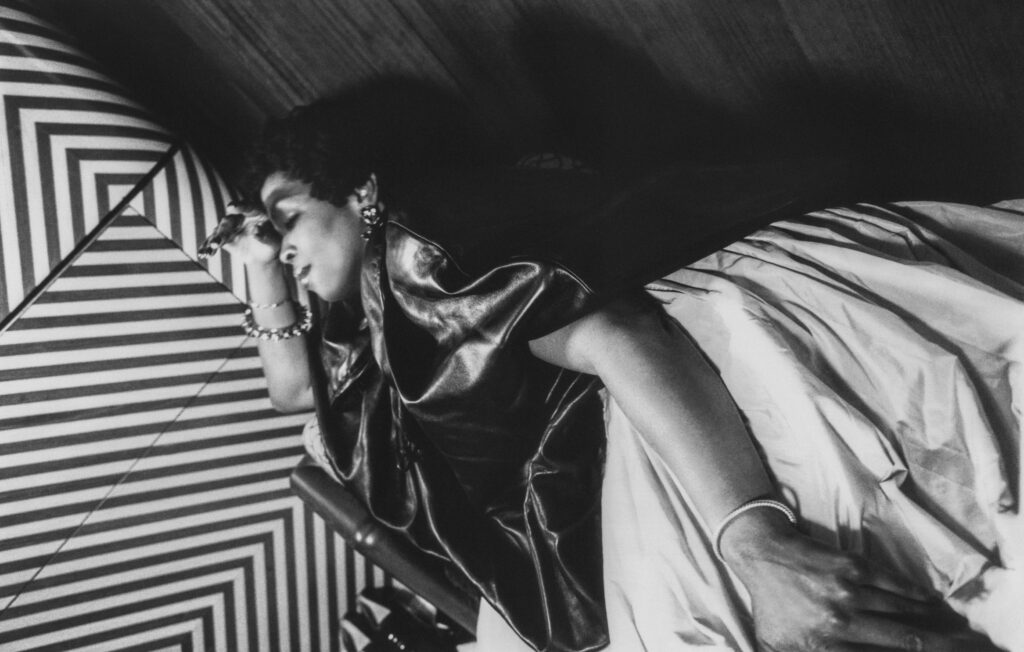
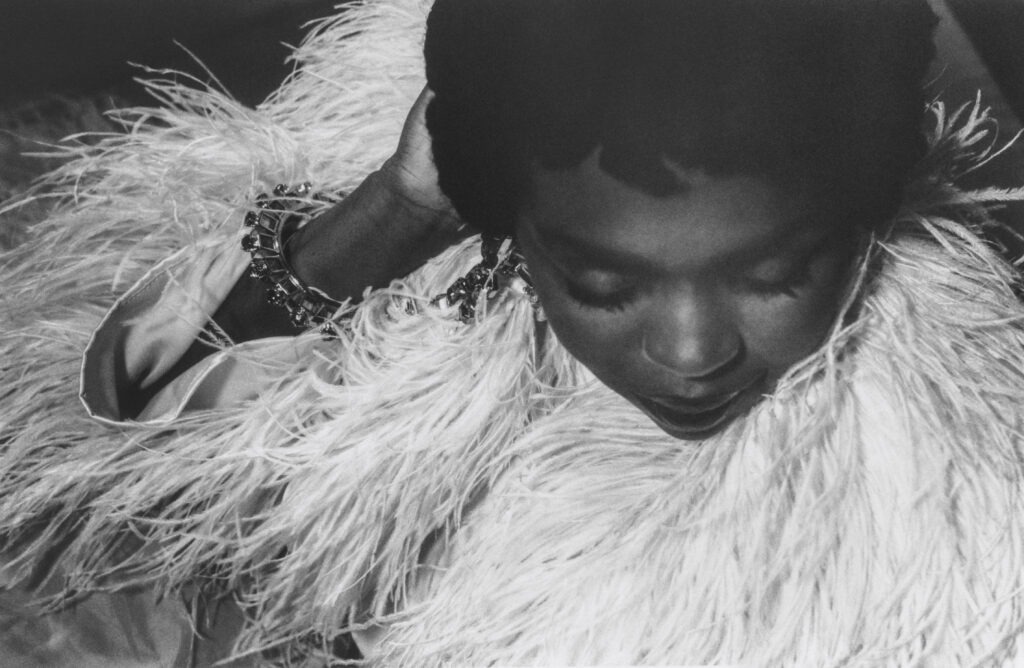
It was not until recent years—decades out from “Miseducation” and in an era in which she prominently presents fashion as a part of her artistic expression—that Ms. Hill has appeared, ever so sparingly, in more traditional ad campaigns and participated in the more subtle brand partnerships that have become typical of celebrities. She starred in the 2018 autumn/winter campaign for Woolrich, titled “American Soul Since 1830,” shot by Jack Davison in Harlem (where Ms. Hill filmed her 1998 “Doo Wop” video). The campaign celebrated American music and style and coincided with the 20th anniversary of the release of “Miseducation.” Then in 2026, Ms. Hill appeared alongside her six children (Zion, Selah, Joshua/YG, John, Sara and Micah) in Denim Tears’ spring/summer campaign. Shot by Liam MacRae, the campaign presented Ms. Hill as a Black matriarch.
Juxtapose this sort of light-touch, purpose-driven capitalism with an industry that now churns out pop stars that release product lines and star in global ad campaigns more often than they release or perform the music that their stardom is built upon. Today, the pop-star-to-brand- ambassador pipeline has arched so far toward the latter that the line is now a circle, where some of the most celebrated pop stars began as influencers and some of the most successful product-based business owners began as pop stars. Ms. Hill seems to have long ago decided that her message, and reserving her voice in service of it, requires she not quite go the way of the pop star.
In Morocco, when we are on set and hot, and the photographer, Jessica, is still trying to find the right light, the right aim, the right shot, there are moments when, as if against her own will, Ms. Hill’s guarded exterior falls away. Her unyielding focus on what she wants to come out, what she wants these images to communicate, is lost in seconds of laughter. There are little quips from her team and ours about her shoes, or the unrelenting heat that make her chuckle. Then, just before the sun sets, Ms. Hill offers a little girl from the neighborhood who has been edging her way into the frame a moment in front of the camera. She reaches her hand to the girl, who is no more than 5 years old, then smiles warmly and asks the child her name. Ms. Hill, who is now a grandmother, poses with the girl for a few frames, holding the child close to her. In that moment, I remember why I fooled myself into believing that Ms. Hill might let down her guard if we were simply in the same room.
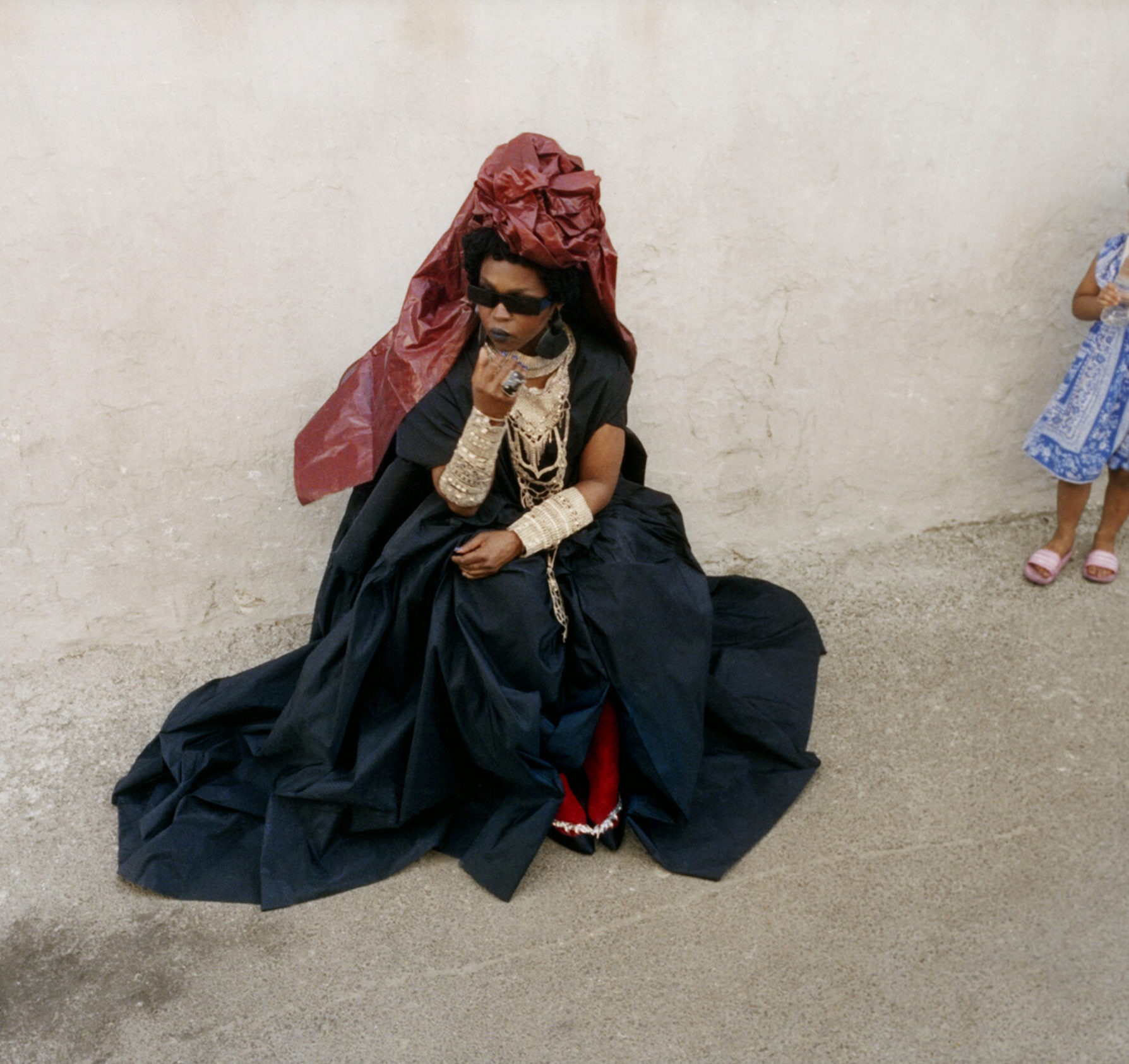
Ms. Hill had shown this same kind of gentle openness to my own child just a year and a half prior when my husband, Jelani Cobb, took my then 8-year-old daughter, Lenox, to an event in Harlem celebrating the 100th birthday of Malcom X and honoring a slate of community leaders. An honoree that evening, my husband made an effort to introduce Lenox to Ms. Hill, who attended the event and performed a medley of her most popular songs. In pictures shared with me, Ms. Hill appeared open and warm, leaning in close to my daughter.
On my return flight back from my reluctant trip to Morocco, I begin to write this note (that has turned out to be something other than a “note”), thinking I have gained some new understanding of Ms. Hill. I hypothesize that her unwavering fidelity to what she regards as her work—her message—and the woman she offers to those she perceives as assisting her in the serious task of her work is not the same woman that is offered up to those she loves, and then not the same woman that she offers those she sees as a part of the community she wants to speak to. This compartmentalization, she suggested in statements made in 2020, and later during her acceptance speech for the 2026 BET Awards, is for her protection, the protection of those she loves and the safeguarding of her message. Her intentions are pure, the purest, even if they are not always received that way. It isn’t until a few weeks later, while writing the longest note, that I realize that this revelation is no revelation at all. Instead, in plain sight, within the lyrics of “Doo Wop”, Ms. Hill’s most popular song, “Lauryn” offered us this nuanced truth, proclaiming she was “only human.” It follows that Ms. Hill is complicated; this makes her abundantly human, and this perhaps is also her legacy.
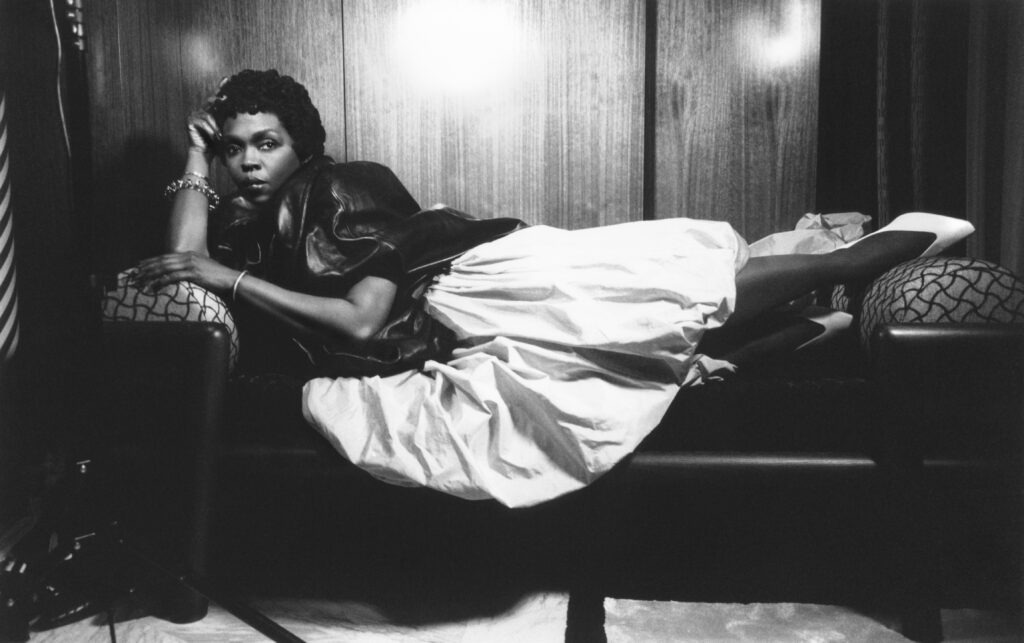
Photographer: Jessica Madavo, Creative Director: Henrietta Gallina, Art Director: Jack Foreman, Lead Wardrobe: Johanna Laracuente, Raheem Robinson, Supporting Wardrobe: Umesi Michael Louis, Hair: Raheem Robinson, Aicha Professional, Makeup: Camara Aunique, Head of Production: Natalie Tuffuoh, Brand & Concept, Local Casablanca Production: Karim El Amri, Production Manager: Zak Barnoussi, Locations Assistant: Yassine Yarziz
Fashion Credits
Look 1: Fur Coat: Fear of God, Pants: Balenciaga, Shoes: Balenciaga, Earrings: YAR, Ring: Lanvin, Necklace: Alexander Mcqueen, Tights: Wolford.
Look 2 & 3: Kimono: MAISONARTC, Blouse: Balmain, Skirt: Innocentia Divina, Belt: Saint Laurent, Hat: MAISONARTC, Earrings: YAR.
Look 4, 5, 6: Glasses: Jean Paul Gaultier, Dress: Balenciaga, Shoes: Balenciaga, Jewelery: artist’s personal Ghanna Gold, Scarf: Vintage, Tights: Wolford.
Look 7: Jacket: Balenciaga, Dress: Balenciaga, Shoes: Balenciaga, Bracelets: Cartier and Mawi.
Look 8: Coat: RVGN, Earrings: Area, Bracelet: Mawi.
Look 9: Dress: MAISONARTC, Glasses: Rick Owen, Bracelets: MORDEKAI, Necklaces: MORDEKAI, Ring: Lanvin, Shoes: Balenciaga, Earrings: Monies, Tights: Wolford.
Look 10: Jacket: Balenciaga, Dress: Balenciaga, Shoes: Balenciaga, Bracelets: Cartier and Mawi.